Safety
🦌 Wildlife Accidents - When Animals Cross
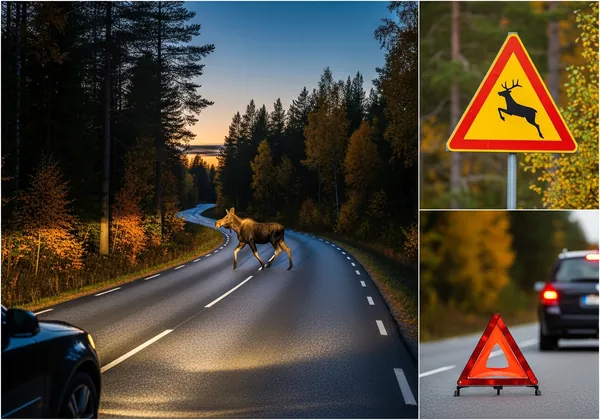
Every year over 60,000 wildlife accidents occur in Sweden. Knowing how to act can save lives.
High-risk periods:
- Dawn and dusk (animals most active)
- May-June (roe deer fawns seeking new territories)
- October-November (moose mating season)
- Autumn and spring (animals move more)
Warning signs:
- Warning for moose/deer/wild boar
- Applies to entire marked area
- Reduce speed and be extra attentive
Preventive driving:
- Reduce speed at dusk/dawn
- Scan forest edges with your eyes
- Be extra careful at wildlife crossings
- See one animal - expect more
- Use high beams when possible
If you see animals on/by the road:
- Reduce speed immediately
- Honk - it may scare the animal away
- Be ready to stop
- Flash high beams
In collision - CAN you swerve?
- Small animals (fox, hare): SWERVE carefully if possible
- Large animals (moose, wild boar): Better to brake straight
- Swerving for moose can cause worse accident (oncoming traffic, ditch)
After wildlife accident:
- Stop and turn on hazard lights
- Set up warning triangle
- Call Police 112 (traffic accident) or 114 14 (non-urgent)
- Mark where animal disappeared into forest
- NEVER approach injured animal
- Stay until police/tracking hunter arrives
Legally:
- You MUST report accidents with moose, deer, wild boar, roe deer, bear, wolf, lynx, otter, eagle
- Leaving scene without reporting is illegal
Lesson Details
Category
Safety
Lesson Number
21
Status
Free