Safety
⚠️ Emergency Braking - When It Matters
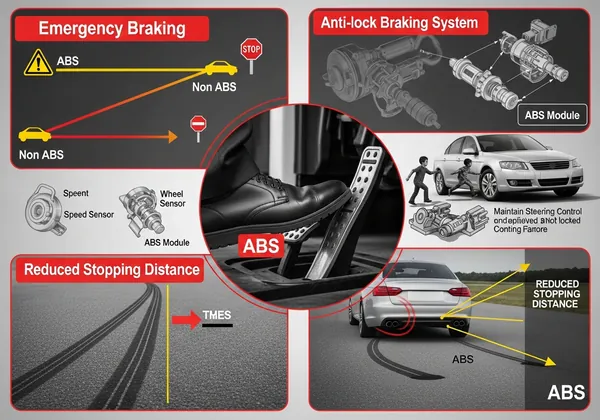
Emergency braking can be the difference between life and death. Do you know how to do it?
When is emergency braking needed?
- Child runs into road
- Vehicle ahead brakes hard
- Animal crosses road
- Something falls from a vehicle
- Unexpected danger arises
Correct technique - with ABS: Most modern cars have ABS (anti-lock brakes).
- Press HARD on brake - all the way down
- Keep the pressure - do NOT release
- Steer around obstacle if possible
- ABS pulses - this is normal, keep pressing
Correct technique - without ABS (older cars):
- Press brake firmly
- If wheels lock - release slightly and press again
- "Pump" brake to maintain steering ability
- Try to steer around obstacle
Common mistakes:
- Pressing too weakly - use FULL force
- Releasing brake at ABS vibrations
- Forgetting to steer
- Looking at obstacle instead of where you want to go
Tips to be prepared:
- Practice emergency braking in safe place
- Learn how your car reacts
- Always keep safe distance
- Be attentive - anticipate risks
Braking distance in emergency:
- 50 km/h → about 12-15 m (dry road)
- 70 km/h → about 25-30 m
- 90 km/h → about 40-50 m
- On slippery road: SIGNIFICANTLY longer!
If collision is unavoidable:
- Brake as much as you can - every km/h counts
- 50 km/h → 70% chance pedestrian survives
- 30 km/h → 95% chance pedestrian survives
- Steer toward what causes least damage
After emergency stop:
- Turn on hazard lights
- Check if anyone is injured
- Move car if blocking and it's safe
- Call 112 if needed
Lesson Details
Category
Safety
Lesson Number
26
Status
Free